


through sustainable liquid fuels
Lets TalkTerms and ConditionsMay 5, 2026
Binders Fail Under Heat. That’s the Problem.
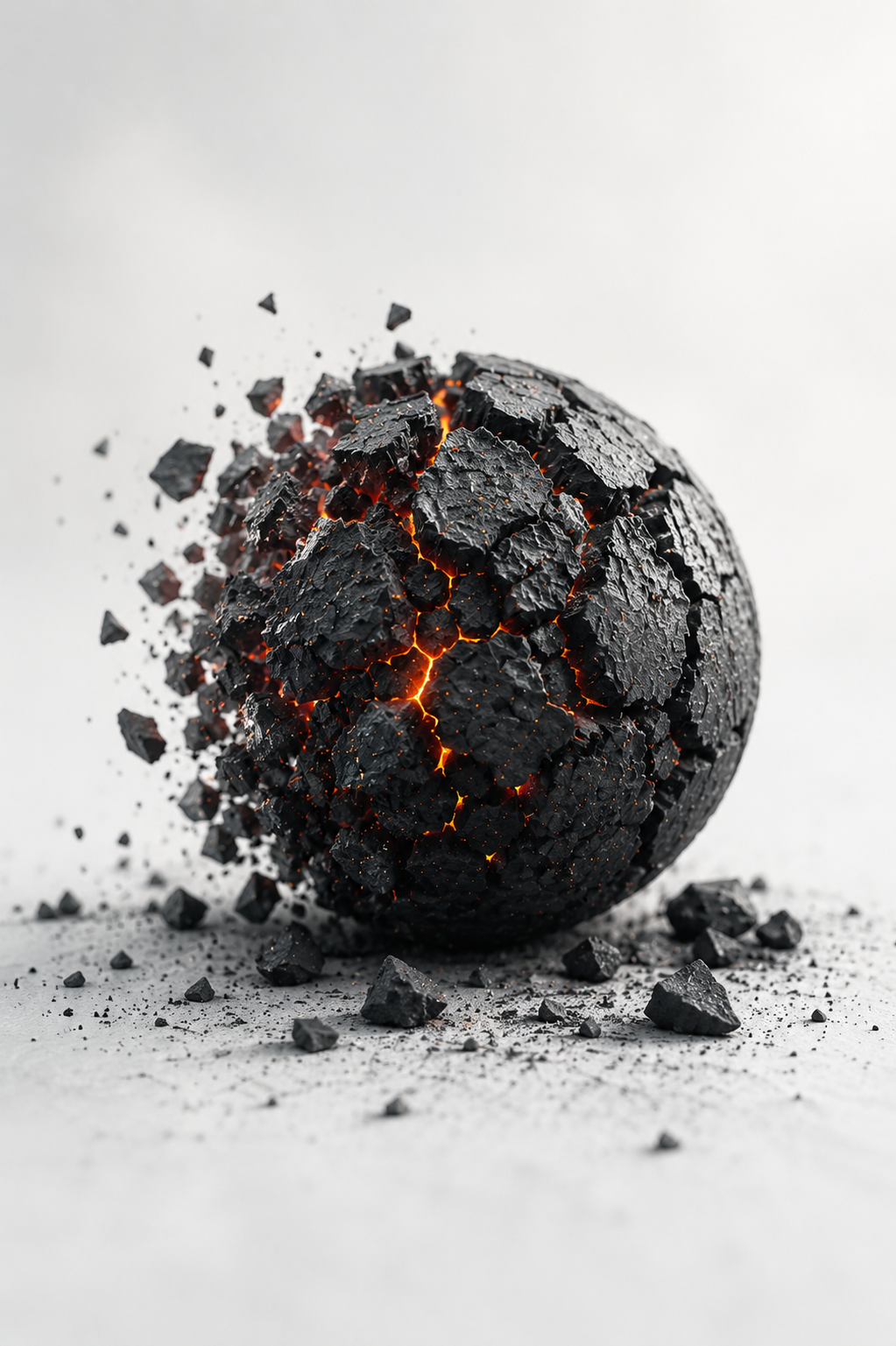
Binders hold biomass together. Until heat tears them apart.
Biomass needs binders to function as an industrial fuel. But most binders, starch, lignin, and chemical additives are designed for ambient conditions, not industrial ones. At a certain temperature, they fail.
They soften and chemical additives release volatiles, and lose structural integrity.
This is the hidden failure point.
Research on biomass densification shows binders introduce unavoidable trade-offs in strength, moisture resistance and durability, but none maintain performance at high temperatures. There is no ideal binder.
Only compromise.
Heavy industry doesn’t operate at room temperature. It operates at:
- 800°C
- 1000°C
- 1200°C+
At these temperatures, material behaviour defines performance. Not carbon content. Not energy value.
The Breakthrough
What if the binder didn’t fail under heat? What if it strengthened?
ByoMax has developed a bio-based binder engineered for high-temperature performance. Instead of degrading, it hardens as the temperature rises.
As heat increases:
- Structure consolidates
- Bonds strengthen
- Material integrity improves
Heat doesn’t break it. It activates it.
What This Changes
At operating temperature:
- Higher crush strength
- Reduced fines
- Stable material structure
- Consistent performance
This isn’t an incremental improvement. It’s an inverted behaviour.
Where ByoMax Wins
The industry optimises for handling and transport.
ByoMax optimises for:
- Furnace performance
- Structural integrity under heat
- Industrial reliability
Drop-in. Stronger under heat. Built for industry.
The Shift
The problem was never biomass. It was how it behaves under heat.
Most binders fail when the temperature rises.
Ours is designed for it.